

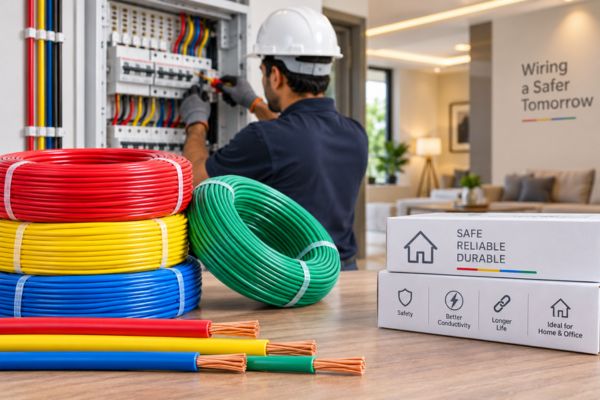
House Wire Manufacturer: How to Choose the Right Wire for Safe Electrical Wiring
Electrical wiring is one of the most important parts of any residential, commercial or industrial building. Lights, fans, switches, sockets and electrical appliances all depend on properly selected wires for reliable power distribution.
Choosing the right House Wire Manufacturer is therefore not only about buying electrical wire. Buyers should consider conductor quality, insulation type, wire size, flexibility, temperature requirements and the electrical load of the application.
Umesh Cable manufactures house wires designed for different electrical wiring requirements. This guide explains what house wire is, its important features, applications and what buyers should consider before choosing a manufacturer.
What Is House Wire?
House wire is an insulated electrical wire mainly used to carry electricity through internal circuits in residential and commercial buildings.
It is commonly installed through conduits in walls and ceilings and used for connections to:
- Lights
- Fans
- Switches
- Electrical sockets
- Distribution boards
- Air conditioners
- Kitchen appliances
- Water heaters
- Other electrical equipment
The wire size and type should always be selected according to the electrical load and installation requirements.
Why Is House Wire Quality Important?
Electrical wiring remains inside a building for many years. Using unsuitable or poor-quality wires can affect the reliability and safety of the complete electrical installation.
A properly selected house wire can help provide:
- Reliable current transmission
- Better electrical conductivity
- Suitable insulation protection
- Easy installation
- Reduced risk of overheating
- Long-term wiring performance
- Convenient maintenance
This is why builders, electricians, contractors and project owners should carefully evaluate the specifications before purchasing house wires.
Important Features to Check in House Wire
1. Conductor Quality
The conductor carries electrical current through the wire. Copper is widely used because of its electrical conductivity and suitability for building wiring.
A flexible conductor also makes it easier for electricians to route the wire through conduits and around bends.
2. Correct Wire Size
House wires are available in different cross-sectional sizes. The correct size depends on the expected electrical load and application.
Lighting circuits, sockets and high-load electrical equipment may require different wire sizes. The appropriate size should be selected according to electrical design requirements.
3. Insulation
Insulation forms a protective layer around the conductor. Different insulation options are available depending on safety, temperature and application requirements.
Common options can include:
- PVC
- FR PVC
- FRLS-H PVC
- HRFR PVC
- ZHFR PVC
4. Flexibility
Flexible house wires are easier to pull through conduits and route through electrical boxes. This can simplify installation, particularly where wiring paths contain multiple bends.
5. Temperature Requirements
Operating temperature is another factor that should be considered while selecting electrical wires. The chosen wire should be suitable for the expected operating conditions.
Types of House Wire Insulation
Different projects may require different insulation characteristics.
PVC House Wire
PVC insulated wires are widely used for general electrical wiring applications.
FR House Wire
FR stands for Flame Retardant. These wires are designed with insulation intended to provide flame-retardant characteristics for suitable applications.
FRLS House Wire
FRLS refers to Flame Retardant Low Smoke. These wires are selected for projects where flame behaviour and smoke generation are important considerations.
HRFR House Wire
Heat Resistant Flame Retardant wires can be considered where additional heat resistance is required along with flame-retardant characteristics.
ZHFR House Wire
ZHFR wire is another insulation option available for projects with specific fire-safety and installation requirements.
The correct insulation should always be chosen based on applicable electrical standards, project specifications and professional recommendations.
Common House Wire Sizes and Their Selection
House wires are manufactured in different conductor sizes to meet various electrical requirements.
Common sizes include:
| Wire Size | Typical Selection Consideration |
|---|---|
| 0.5 sq mm | Low-current wiring requirements |
| 0.75 sq mm | Light electrical applications |
| 1 sq mm | General low-load circuits |
| 1.5 sq mm | Common building wiring requirements |
| 2.5 sq mm | Higher-load circuits |
| 4 sq mm | Power-related applications |
| 6 sq mm and above | Higher electrical load requirements |
Applications of House Wires
Residential Buildings
House wires are extensively used in apartments, villas, bungalows and residential complexes for internal electrical connections.
Commercial Buildings
Offices, retail stores, shopping spaces and other commercial properties require reliable wiring for lighting, sockets, equipment and other electrical systems.
Hospitals and Healthcare Facilities
Electrical wiring is required for lighting, equipment and supporting electrical infrastructure in healthcare buildings.
Schools and Educational Buildings
Schools, colleges and institutional buildings use house wires for lighting, fans, sockets and other electrical circuits.
Hotels and Hospitality Projects
Hotels require extensive electrical wiring for guest rooms, common areas, kitchens and various electrical equipment.
House Wire vs Panel Wire
House wires and panel wires may look similar, but their primary applications can differ.
| House Wire | Panel Wire |
|---|---|
| Used mainly for building wiring | Used mainly inside electrical panels |
| Suitable for lights, fans and sockets | Used for switches, relays and control equipment |
| Commonly routed through conduits | Commonly routed inside panels |
| Used in residential and commercial projects | Common in industrial and control applications |
Why Choose Umesh Cable for House Wires?
Umesh Cable has been involved in wire and cable manufacturing since 1982 and manufactures multiple cable categories for different applications.
Its house wire range offers features such as:
- Flexible copper conductor construction
- Multiple conductor sizes
- PVC insulation options
- FR PVC options
- FRLS-H PVC options
- HRFR PVC options
- ZHFR PVC options
- Multiple wire colours
- Different coil-length requirements
- Options for residential and electrical panel applications
These choices allow buyers to select wires based on their specific electrical and project requirements.
Frequently Asked Questions
House wire is an insulated electrical wire used for internal electrical circuits in homes, apartments, offices and other buildings.
Copper conductor wires with suitable electrical insulation are commonly used for house wiring. The exact wire specification depends on electrical load and installation requirements.
House wires are available in multiple conductor sizes. Umesh Cable’s single-core range includes sizes starting from 0.50 sq mm and extending to larger sizes for different electrical requirements.
FR stands for Flame Retardant. FR house wire uses insulation designed to provide flame-retardant characteristics for appropriate electrical applications.
FRLS stands for Flame Retardant Low Smoke. It is selected for applications where flame behaviour and reduced smoke characteristics are important considerations.
Wire size should be selected according to current load, circuit length, voltage drop, installation conditions and applicable electrical requirements. A qualified electrical professional should determine the appropriate specification.
Some single-core wires can be suitable for control panel wiring depending on their design and electrical specifications. The wire should always be selected according to the panel requirements.
A reliable manufacturer can provide consistent conductor construction, insulation specifications, different sizes and technical information needed to select the appropriate wire.
Umesh Cable manufactures house and panel wires at Vatva GIDC in Ahmedabad, Gujarat, for residential, commercial and other electrical applications.
Yes. Along with house and panel wires, Umesh Cable manufactures elevator travelling cables, multi-core round cables, submersible cables, pendant cables, welding cables and other cable products.
Conclusion
Selecting the right House Wire Manufacturer is an important part of planning a reliable electrical installation. Buyers should consider conductor quality, wire size, insulation type, flexibility, operating conditions and technical specifications before making a purchase.
Umesh Cable offers house wires for residential, commercial and electrical applications with multiple conductor sizes and insulation options. Whether the requirement is for a new building, electrical project, control panel or bulk supply, selecting the correct wire specification can help support safe, efficient and long-lasting electrical performance.