

Lift Cables for Safe Elevator Operations
Elevators operate continuously in residential buildings, hospitals, hotels, shopping centres, offices and industrial facilities. Every movement of the lift depends on a stable connection between the control system, motor, cabin and safety equipment. Lift cables help transmit electrical power, control signals and communication data while the elevator moves between floors.
Umesh Cable offers lift cable solutions for different elevator wiring requirements. These cables are designed to support flexible movement, dependable signal transmission and long-term electrical performance in lift systems.
What Are Lift Cables?
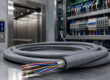
Lift cables are flexible electrical cables used to connect the elevator cabin with the controller, power supply, door system and other fixed electrical equipment.
These cables travel with the lift cabin whenever it moves between floors. Therefore, they must remain flexible while carrying multiple electrical and communication connections.
Depending on the lift design, the cable may carry:
- Cabin lighting power
- Lift control signals
- Door opening and closing signals
- Alarm system connections
- Intercom communication
- Floor indicator signals
- Emergency lighting connections
- CCTV camera signals
- Safety circuit connections
- Display and speaker wiring
The number of cores, conductor size and cable construction depend on the elevator type and wiring requirements.
Why Ordinary Electrical Cables Are Not Suitable for Lifts
Ordinary electrical cables are generally designed for fixed installations. Once installed, they remain in one position and experience very little movement.
Lift cables operate under completely different conditions. They move, bend and hang vertically during every elevator journey. Using an unsuitable cable may result in:
- Conductor breakage
- Damaged insulation
- Interrupted control signals
- Door operation problems
- Cabin lighting failure
- Frequent electrical faults
- Unexpected lift stoppage
- Higher maintenance costs
Types of Lift Cables
Different elevator systems use different cable designs. The right type should be selected according to lift height, operating speed, number of connections and installation conditions.
Elevator Flat Cable
Elevator flat cables contain multiple conductors arranged parallel to each other inside a flat outer covering.
The flat design helps the cable move smoothly during vertical travel and reduces twisting. These cables are commonly used in passenger lifts, hospital lifts, commercial elevators and residential buildings.
Round Lift Cable
Round lift cables are used in selected elevator, crane, hoist and lifting applications. Their suitability depends on the installation method and movement pattern.
Round cables may be preferred where the cable needs flexibility in multiple directions.
Lift Pendant Cable
Lift pendant cables are used with hanging control stations and push button operating systems. They are commonly installed in goods lifts, hoists, cranes and material handling equipment.
These cables connect the operator controls with the electrical system.
Shielded Lift Cable
Shielded lift cables help reduce electrical interference around sensitive control and communication signals.
They may be used for:
- Digital lift controllers
- Sensors
- Intercom systems
- CCTV cameras
- Data communication
- Electronic displays
Elevator Control Cable
Elevator control cables transmit signals between the cabin, floor buttons, door mechanism, controller and safety devices.
Consistent signal transmission is important for accurate stopping, door movement and lift operation.
Applications of Lift Cables
Lift cables are used in various vertical transportation and material handling systems.
Common applications include:
- Passenger elevators
- Residential lifts
- Hospital lifts
- Hotel elevators
- Shopping mall lifts
- Office building elevators
- Goods lifts
- Industrial elevators
- Hydraulic lifts
- Machine room less elevators
- Car parking lifts
- Dumbwaiter lifts
- Construction hoists
- Cranes and lifting systems
Important Features of Quality Lift Cables
- High Flexibility : Lift cables experience continuous movement. The conductor and insulation must tolerate repeated bending without cracking or breaking.
- Strong Electrical Insulation : Suitable insulation helps reduce the risk of electrical leakage, short circuits and contact between internal conductors.
- Reliable Conductivity : Good quality conductors provide dependable power and signal transmission with controlled electrical loss.
- Mechanical Strength : The cable must withstand its hanging weight, movement and operating stress throughout the elevator travel.
- Multiple Core Options : Lift systems may require several electrical connections within one cable. Multi core construction helps carry different circuits through a compact cable arrangement.
- Core Identification : Numbered or colour coded cores make installation, testing and maintenance easier for elevator technicians.
- Smooth Movement : A properly designed lift cable should travel without excessive twisting, tangling or rubbing against surrounding components.
How to Select the Right Lift Cable
Lift cable selection should be based on the elevator manufacturer’s technical requirements. Choosing a cable only by its external size may lead to performance problems.
- Number of Cores:The number of required cores depends on the cabin lights, buttons, sensors, alarms, intercom, door system and safety circuits.
- Conductor Size:The conductor size must be suitable for the expected current and connected electrical load.
- Lift Travel Height:A high rise elevator may require a longer cable with suitable hanging strength and movement characteristics.
- Cable Shape:Flat and round cables have different installation and bending properties. The correct construction should be selected according to the lift design.
- Bending Radius:Every cable has a recommended minimum bending radius. Sharp bends can damage the conductor and insulation.
- Shielding Requirement:Electronic control systems may require shielding to protect sensitive signals from electromagnetic interference.
- Operating Environment:The selection process should consider heat, moisture, dust, oil exposure, installation space and daily operating cycles.
Why Choose Umesh Cable?
Umesh Cable provides cable solutions for residential, commercial and industrial electrical requirements. Lift cables are available for different elevator control, power and communication applications.
Customers can select cables according to:
- Number of cores
- Conductor size
- Required cable length
- Flat or round construction
- Elevator application
- Signal and control requirements
- Installation conditions
Sharing complete elevator specifications helps in selecting a suitable cable for dependable performance.
Conclusion
Lift cables play an important role in elevator safety, communication and daily operation. They must handle repeated bending while carrying essential electrical and control connections.
Selecting the correct lift cable can reduce electrical faults, improve lift reliability and support long term system performance. Umesh Cable offers lift cable solutions for passenger elevators, goods lifts and industrial lifting equipment.
Contact Umesh Cable for lift cable product information and application support.
Frequently Asked Questions
A lift cable is a flexible electrical cable that carries power, control and communication connections between an elevator cabin and the fixed control system.
Flat cables move smoothly during vertical travel and help reduce twisting. They can also carry multiple conductors within a compact design.
Normal electrical wires are generally designed for fixed installation. Lift systems require flexible cables designed for repeated movement and bending.
The required number of cores depends on the elevator controls, lighting, alarms, communication devices, sensors and door circuits.
Lift cables are used in passenger elevators, goods lifts, hospital lifts, residential elevators, industrial lifts and material handling equipment.
Cable failure may occur because of repeated bending, excessive tension, sharp bends, twisting, poor clamping, ageing or conductor damage.
Lift cables should be replaced when cracks, broken conductors, electrical leakage, irregular signals or visible mechanical damage are found.
Shielded cables may be used for sensitive control, data and communication signals where electrical interference needs to be reduced.
The cable should be regularly checked for cracks, twisting, damaged clamps, loose terminals and restricted movement.
Umesh Cable offers cable solutions for passenger elevators, goods lifts and different commercial or industrial lifting applications.